Blogs Details

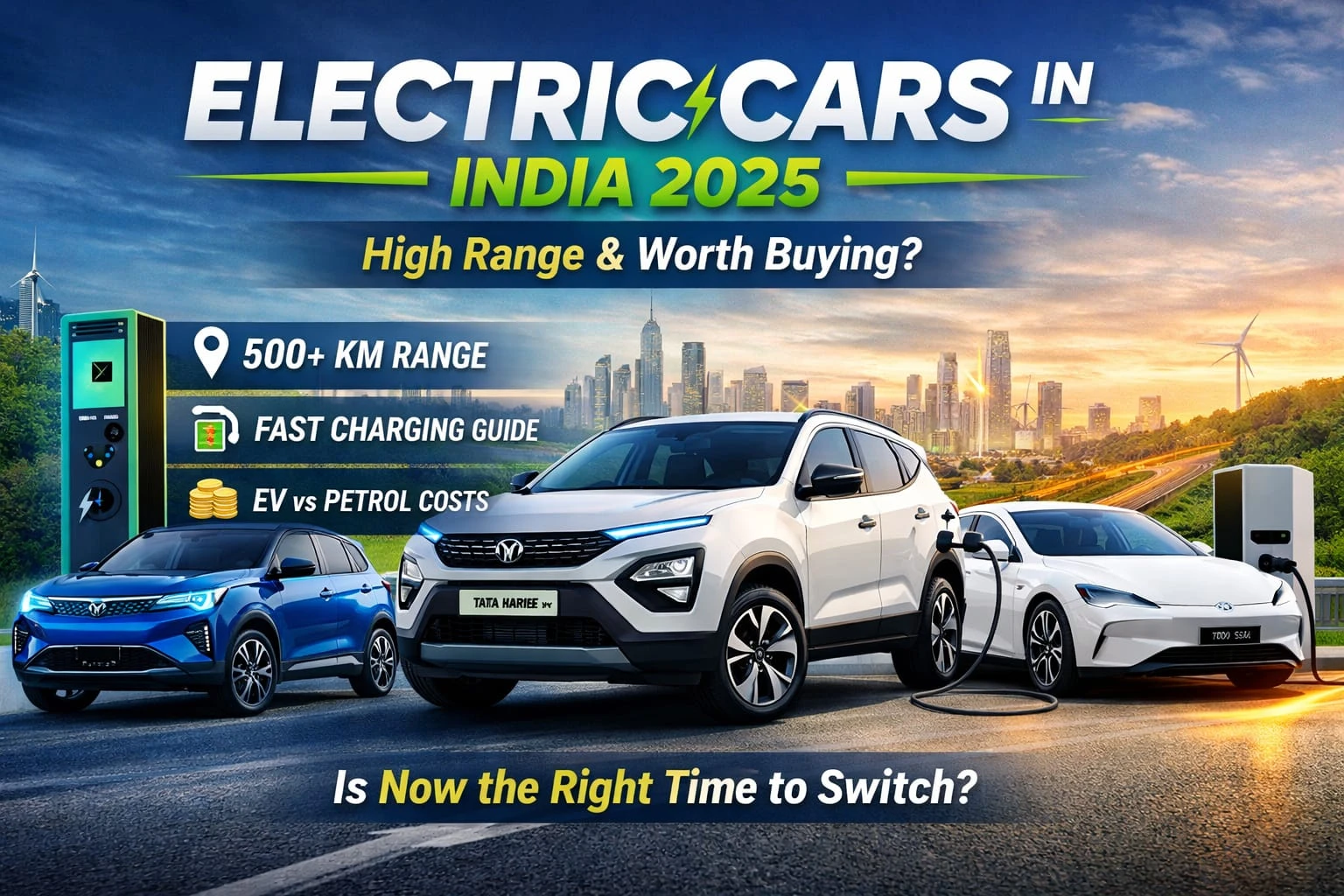
Electric Cars in India (2025): High-Range EVs, Real Costs & Is It the Right Time to Buy?
Electric cars in India have evolved rapidly over the last few years. What was once considered a city-only solution has now become a serious alternative to petrol and diesel cars, thanks to high-range batteries, faster charging, and improved infrastructure.
In 2025, several electric cars in India offer 500 km or more certified range, making EVs suitable even for highway and long-distance use.
So, are electric cars finally ready for mass adoption in India? Let’s break it down with facts.
---
Why Electric Cars Are Growing Fast in India
1. Rising Fuel Prices: Petrol prices continue to strain monthly budgets.
2. Low Running Cost: EVs cost approx. ₹1–₹2 per km vs ₹8–₹10 per km for petrol.
3. Improved Battery Technology: Longer range and better durability.
4. Government Support: Lower road tax, subsidies, and EV-friendly policies.
5. Silent & Smooth Driving Experience
---
High-Range Electric Cars Available in India (2025)
Range anxiety is no longer the biggest concern. Here are popular and upcoming high-range EVs in India:
Electric Car Certified Range Approx Price (₹ Ex-Showroom)
Mahindra XEV 9e / BE Series 550–650 km ₹25–30 lakh
Tata Harrier EV ~600+ km ₹25 lakh (expected)
BYD Atto 3 ~521 km ₹34 lakh
BYD Seal 580–650 km ₹41 lakh
Tata Nexon EV (Long Range) 65 km ₹14.5–19.5 lakh
MG ZS EV 461 km ₹23 lakh
👉 These ranges make EVs practical for inter-city travel, highway driving, and even weekend road trips.
---
Real-World EV Range vs Claimed Range
While certified range figures are high, real-world driving depends on:
Driving speed
AC usage
Load & terrain
Driving mode (Eco / Sport)
🔹 A 600 km claimed EV usually delivers 450–520 km real-world range, which is sufficient for most Indian users.
---
Charging Infrastructure in India (Reality Check)
Charging has improved significantly:
Home charging: 6–8 hours overnight (most convenient)
Fast chargers: 20–40 minutes for 10–80% charge
Highway chargers: Rapid expansion on major expressways
Cities like Delhi-NCR, Mumbai, Pune, Bengaluru, Hyderabad already have strong charging networks.
---
Cost of Ownership: EV vs Petrol Car
🔋 Electric Car (Approx):
Running cost: ₹1–2 per km
Maintenance: Very low (no engine oil, clutch, gearbox)
Insurance: Similar to petrol cars
Battery warranty: 8 years / 1.6 lakh km (average)
⛽ Petrol Car:
Running cost: ₹8–10 per km
Higher maintenance over time
➡️ Over 5 years, EV owners can save ₹3–6 lakh depending on usage.
---
Challenges That Still Exist
Higher upfront cost (especially high-range EVs)
Charging availability in remote areas
Battery replacement cost after warranty (long-term concern)
However, these gaps are shrinking every year.
Conclusion
Electric cars in India are no longer limited to short city drives. In 2025, high-range EVs offering 500–650 km range are already available, making them suitable for daily commuting, highway travel, and long-distance usage.
With improving charging infrastructure, strong battery warranties, and significantly lower running costs, EVs now stand as a real and practical alternative to petrol and diesel cars.
If your daily or monthly driving is high — or if you want lower ownership costs with future-ready technology — choosing the right high-range electric car in India makes complete sense today.
Recent Blogs
Lorem ipsum dolor sit amet.
